
Introduction
Hey everyone, I'm Oil. This guide walks through building a commercial paid Skill—why people pay for plaintext files, how to turn real domain taste into a genuine product barrier beyond prompts, where to draw the line between free open-source and Pro editions, and how to run billing, CLI-authenticated delivery, and auto-updates at near-zero fixed cost.
If you're new to Skills or haven't built one yet, start with What Are Skills? A Practical Guide and How to Build a Useful Skill from Scratch first.
Why Plaintext Skills Can Actually Sell
1. What Separates a Casual Skill from a Paid One?
Since a Skill is just a folder of Markdown docs and scripts, everyone asks the obvious question: if it ships in plain text, why wouldn't anyone just read the source instead of paying?
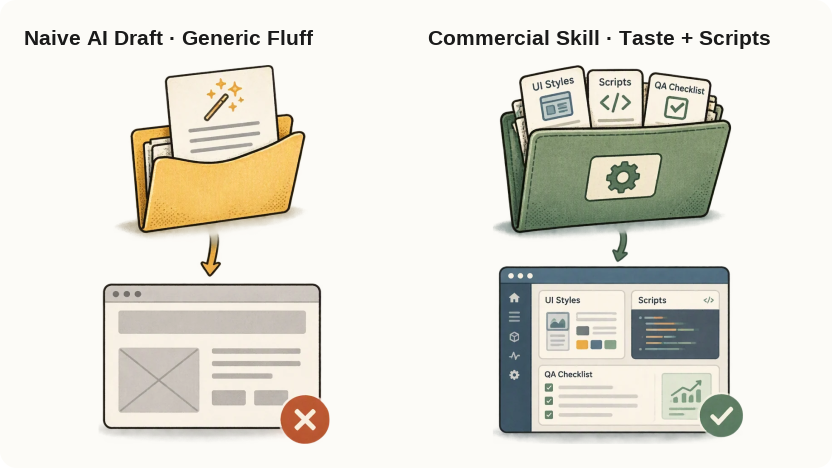
Fair point—any Skill your local AI Agent executes must be readable in plaintext (even "encrypted" wrappers are trivial to dump once an Agent loads full context).
The real difference mirrors Vibe Coding itself: anyone can prompt a webpage, yet builders with real design taste and engineering discipline ship dramatically better products. Experienced builders know the exact failure modes where models cut corners, and plug those gaps with structured workflows, review rubrics, and custom scripts a newcomer can't conjure from a single prompt.
2. Three Reasons Real Users Pay for Plaintext Skills
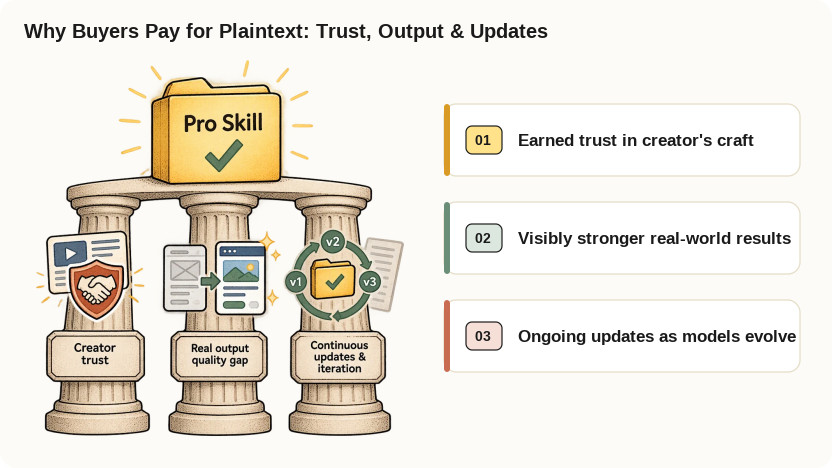
- Trust in the creator's craft: Sharing real work consistently builds genuine trust; a focused paid product gives audiences who already value your taste a direct way to adopt it.
- Visibly better real-world output: In design Skills, Pro workflows, rubrics, and inspection scripts produce noticeably cleaner UIs and save hours of rework.
- Ongoing iteration & updates: The core long-term advantage. A static copied folder freezes on day one; models and best practices shift monthly, and paying buyers are buying continuous updates.