
Introduction
Hey everyone, I'm Oil. This guide shares how I built a content-creation side business from scratch after work.
My day job is AI Product Manager; I generally record after work and publish across Xiaohongshu (RedNote), Bilibili, Douyin, WeChat Channels, and X. In roughly half a year, Xiaohongshu and Bilibili crossed 20K followers, Douyin hit 10K, X approached 10K, and combined sponsorship + indie product income reached 2–3× my full-time salary. Here's the exact lightweight system that made it sustainable.
1. Why Start Creating Alongside a Day Job
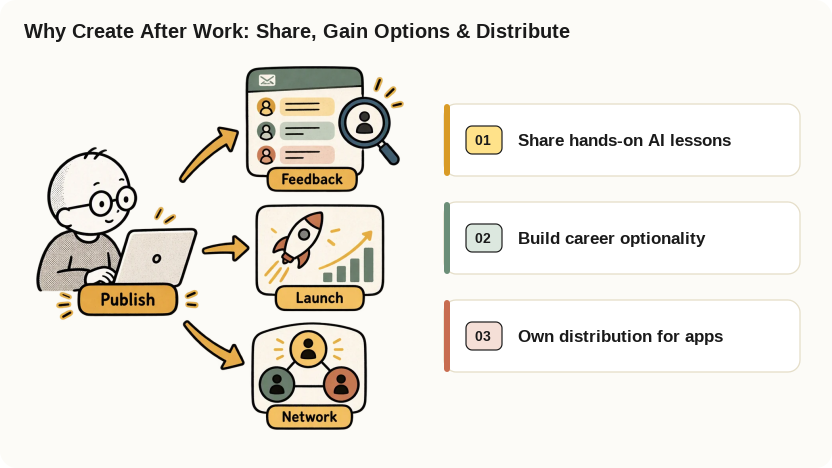
I started filming during a brief job gap in late February and kept going after returning to full-time work for three simple reasons: wanting to share practical AI lessons, creating career and income optionality, and building a direct distribution channel for my own small products.
2. One Ultra-Light Format: Screen Share + Voiceover + Face Cam
Every single video I ship follows one dead-simple format: screen recording + natural spoken explanation + a corner webcam.
1. Why Skip Heavy Motion Graphics?
With a full-time job and a 1–2 day posting cadence, complex editing and MG effects aren't sustainable. Compress production time while keeping real substance high.
2. Why Keep the Corner Webcam?
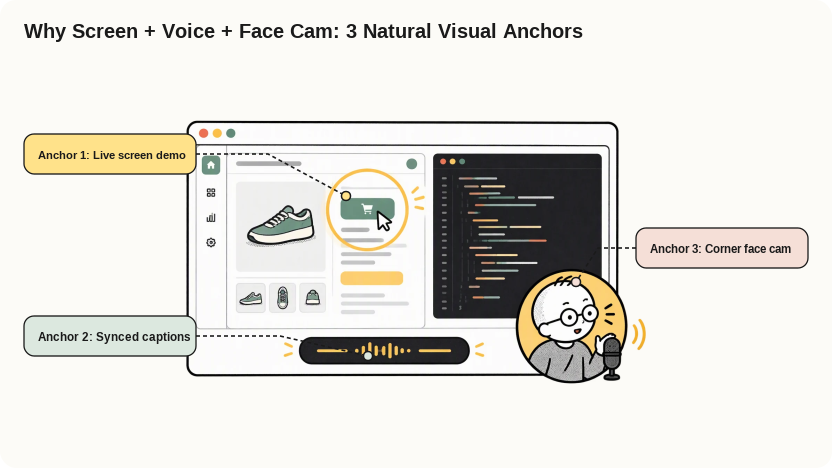
- Instant personal recognition and human warmth.
- Three alternating visual anchors (screen demo, subtitles, speaker face) so viewers never get bored during pauses.
- Natural face-to-face tone—facial expressions carry nuance voice alone misses.
3. Real Proof That Plain Substance Works
Two breakout posts proved there is a real audience for honest demos over flashy editing:
- On Xiaohongshu, a plain screen-recorded walkthrough titled "Letting Claude PM, Codex Code, and Gemini Design" earned 6,359 likes and 10,000 saves.
- On X—started from zero followers in July with zero follow-for-follow—a video showing how I built my personal site's web animations and open-sourcing the companion Skill oil-motion (see What Are Skills? A Practical Guide) hit 945.7K views, 7,008 likes, and 12.8K bookmarks, spreading widely among international developers even with Chinese audio and subtitles.

3. Never Running Out of Topics
1. Three Reliable Topic Sources
- New models and AI tools—only when hands-on testing yields something worth sharing.
- My own products and Skills—every feature built is ready-made material.
- Real everyday AI workflow tricks discovered while working.
2. The Self-Feeding Flywheel & Instant Capture
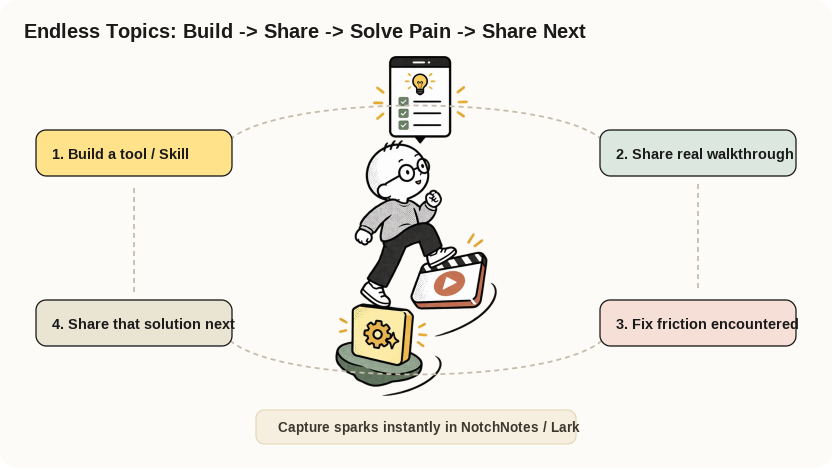
Building continuously creates a compounding loop: ship a Skill → share it → share how you grew it → hit a friction point while creating (like covers, subtitles, or landing pages—see Designing Polished UI with AI) → solve it with oil-cover, oil-subtitle, oil-ui, or draw-ui → share that solution next.
Whenever an idea sparks mid-work, capture it immediately in NotchNotes (GitHub) or a Lark checklist so you never face a blank page at recording time.

3. Skip Chasing Trends—Share Public Learning Logs
Never copy trending competitors just for clicks—build original work others analyze later. And treat posts as Build-in-Public learning logs ("here's my honest hands-on take—correct me if I missed something") to drop perfectionist pressure immediately.