
Not long after my 20k-follower recap, my Xiaohongshu (RedNote) account crossed 30,000 followers. Thank you to everyone who has been reading and supporting my work. Here is where my audience currently stands across platforms:
| Platform | Followers |
|---|---|
| Xiaohongshu (RedNote) | 30k |
| Bilibili | 24k |
| Douyin | 16k |
| X (Twitter) | 11k |
| WeChat Channels | ~5k |
Between 20k and 30k followers, one big thing changed in my own life: I resigned from my day job. People call this a one-person company (OPC), though I think of myself as an indie developer rather than a pure AI content creator.
You might wonder how 30k followers on Xiaohongshu is enough to quit a salary. The short answer is that since I began launching paid products in October, my independent income has already surpassed my previous paycheck—making the transition straightforward. Using this 30k milestone, I want to share the three reasons I decided to leave and what the first stretch of full-time indie work actually feels like.
Disliking Dim, Cramped Office Environments
The first reason comes down to personality: I really dislike working on-site in an office. After graduating, I worked remotely for a long stretch, and when a later job pulled me back into an office, I never fully adjusted.
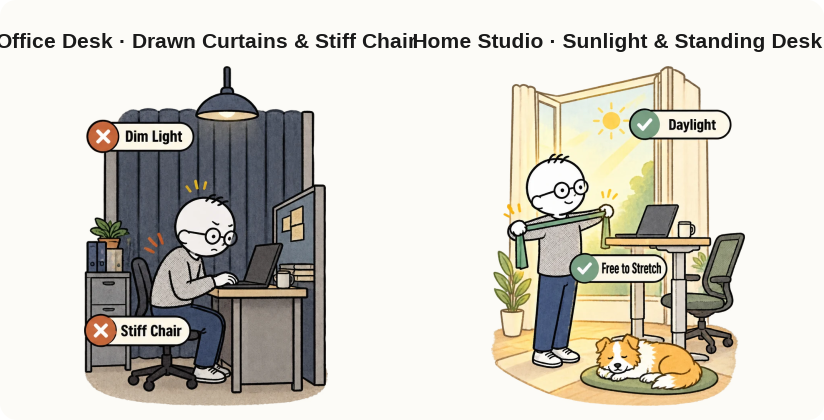
Part of it is physical space. I love bright, open rooms with natural light. Sitting all day in an office with the blinds drawn under dull overhead lamps leaves me feeling boxed in and drained.
The other part is sitting still for hours. Office desks and chairs never quite fit right, and my neck, shoulders, and lower back get stiff quickly. At home I have a standing desk and an ergonomic chair; when I hit a wall coding, I can stand up, stretch, knock out a few push-ups, or pull a resistance band. None of that hurts productivity—it actually resets my focus—whereas doing push-ups next to a corporate cubicle gets you stared at like an alien.
Since leaving, my daily rhythm feels much more comfortable. If I feel sleepy at 11 a.m. on a Tuesday, I take a nap. If coding starts dragging at 3 p.m., I walk my dog or put Bilibili on the TV for a bit. Owning my energy and schedule is something I wanted for years.
Corporate Alignment Friction vs. AI Speed
The second reason is that staying at a company started feeling like an increasingly poor use of my time.
Earlier in my career, I genuinely valued joining strong teams. Working inside a company forces you into problems you rarely touch solo—product design, monetization, launches, SEO. Many of my core skills came from being pushed to solve those on the job.
As my own toolkit grew, though, the learning curve inside corporate roles flattened out. Plenty of teams operate mostly on past playbooks, repeating predictable motions week after week. Meanwhile, the skills I actually want to deepen now are much easier to learn by shipping my own products and distribution, with far more room to experiment and make mistakes.
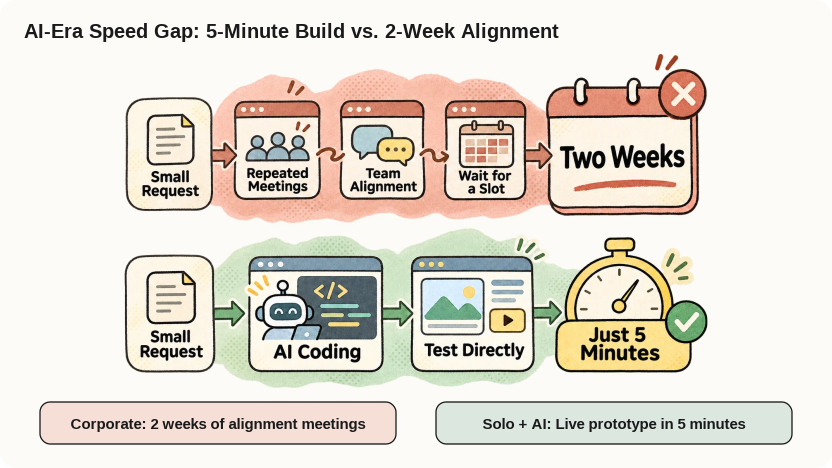
AI coding tools pushed that gap over the edge. Prototyping with AI is fast—many times, a feature AI can build in five minutes takes two weeks of cross-functional meetings and sign-offs inside a company before it can even start. Sitting through endless rounds of alignment felt like watching my own time evaporate.
Real Revenue From Paid Products
Of course, wanting to leave is not enough on its own. What actually gave me the confidence to hand in my notice was seeing positive revenue from products I built myself.
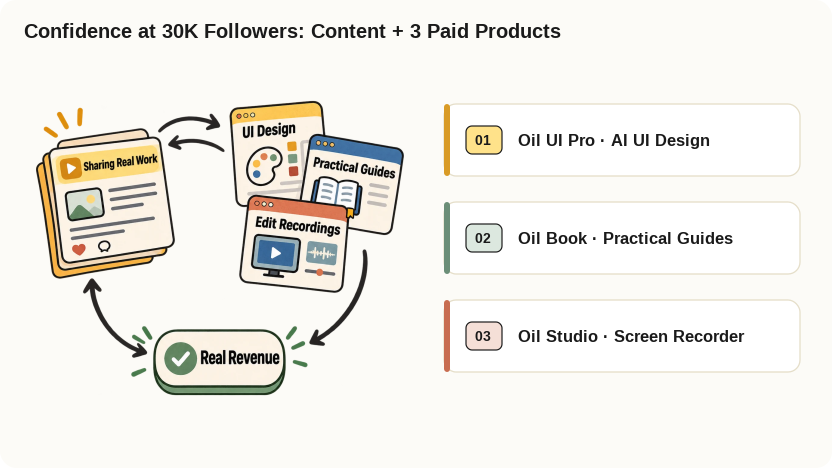
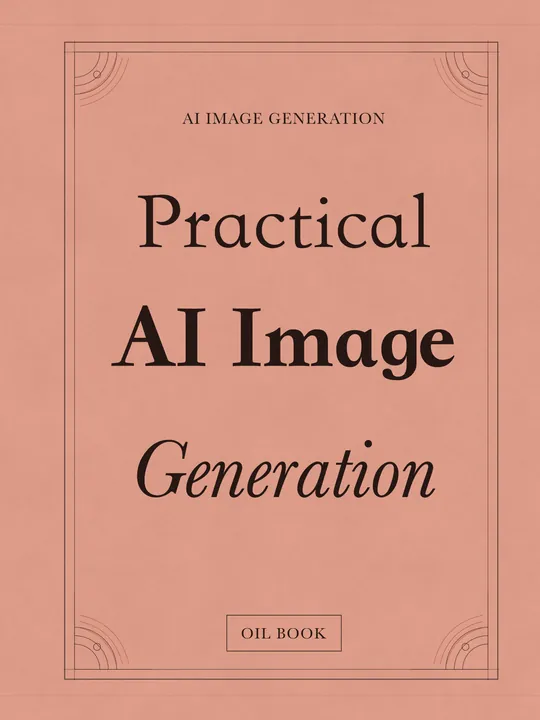
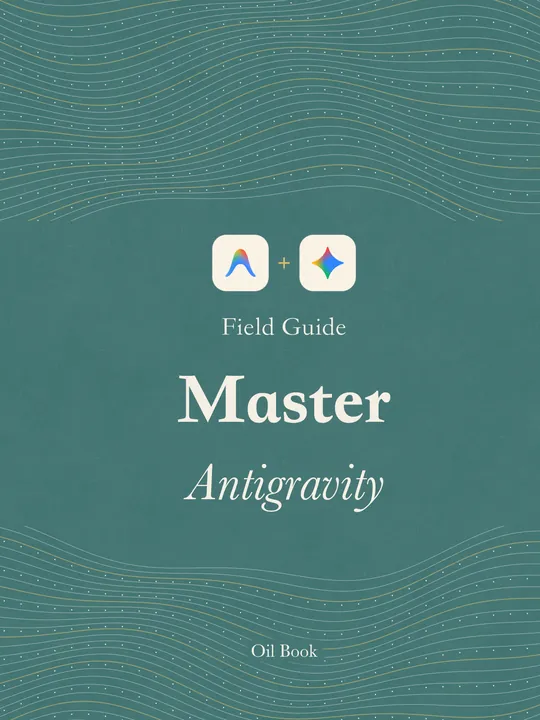
Starting in October, I focused on three paid products: Oil UI Pro (a paid Skill for AI interface design), Oil Book (the hands-on field guide site you are reading right now), and Oil Studio (a local macOS screen-recording and editing app)—iterating on the software while documenting the real build process in public. Combined product revenue plus creator income quickly grew past my day-job salary.


I am skipping exact revenue numbers for now because October was only the start; I do not yet know what steady-state monthly numbers look like, and sharing such short-term numbers isn't very convincing. Once there is a longer track record, I will break down the monetization numbers in a dedicated post.
Personally, I was already willing to take a pay cut in exchange for freedom and a better daily rhythm. Earning more instead of less removed the last reason to stay employed.
That is also why I see myself as an indie developer first, not a pure AI influencer. Thirty thousand followers on a single platform is modest by creator standards. Generating sustainable income at that size did not come from chasing viral trends or sponsorships—it came from sharing real engineering work where content and products reinforce each other.
What Daily Indie Life Actually Feels Like
Beyond setting my own hours, my day-to-day headspace has shifted noticeably since leaving.
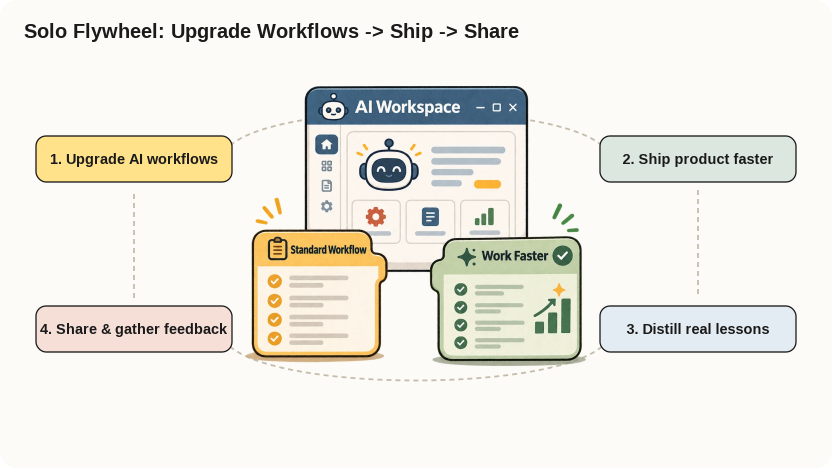
Every morning I wake up with more things I genuinely want to build than hours in the day. Shipping your own software still means handling user requests and fixing bugs, yet it feels nothing like a corporate job: no watching Lark or WeChat groups on edge waiting for someone to drop low-value busywork on your plate, and no navigating politics with people you do not click with. Fixing bugs in your own product means polishing your own craft on your own schedule, and finishing a day feels genuinely rewarding.
I am also spending a lot of time sharpening my own efficiency. Because AI models are so capable now, refining my daily workflows and SOPs (standard operating procedures) compounds immediately—making me faster while giving me real material worth sharing.
Summary
I have never considered myself someone with grand ambitions to build an empire—I mostly just want to enjoy everyday life with freedom and comfort.
At the same time, I move fast on ideas: once something clicks in my head, I want to build it immediately. If I had to joke about my operating style, it is "idealistic on strategy, all-in on execution."
Thank you to everyone following along. Going forward, I will keep building products, sharpening my AI workflows, and sharing the real lessons and pitfalls along the way.